

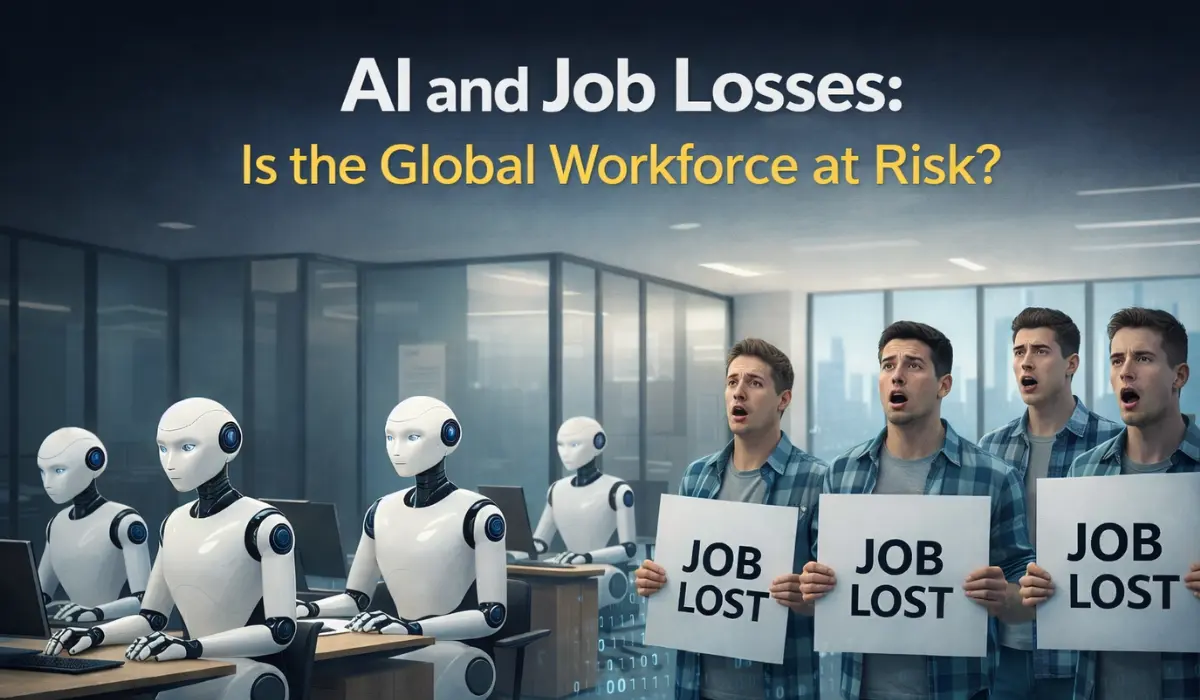
AI and Job Losses are reshaping employment worldwide. Is automation destroying jobs or creating new opportunities for the future workforce?
Table of Contents
The Concern Everyone Feels
There’s a growing conversation happening everywhere—from offices to college campuses—and it revolves around one issue: AI and Job Losses.
Automation is no longer limited to factories. It’s entering white-collar jobs, creative work, and even decision-making roles. Naturally, people are asking whether AI will redefine employment as we know it.
The concern is real, but the story is more complex than it appears.
What Is Driving AI and Job Losses?
The rise of AI and Job Losses is driven by a mix of technological progress and economic incentives.
Key Factors
- Automation reduces time and human effort
- Businesses aim to cut operational costs
- AI systems are becoming more intelligent
- Global competition forces companies to adopt technology
Jobs Most Affected by AI
Not every job faces the same level of risk from AI and Job Losses.
High-Risk Roles
- Data entry jobs
- Basic customer support
- Repetitive manufacturing work
- Routine financial processing
These roles are easier to automate, making them more exposed to AI and Job Losses.
Lower-Risk Roles
- Creative professionals
- Strategic leaders
- Healthcare workers
- Skilled technicians
These jobs rely on human judgment, which reduces the immediate impact of AI and Job Losses.
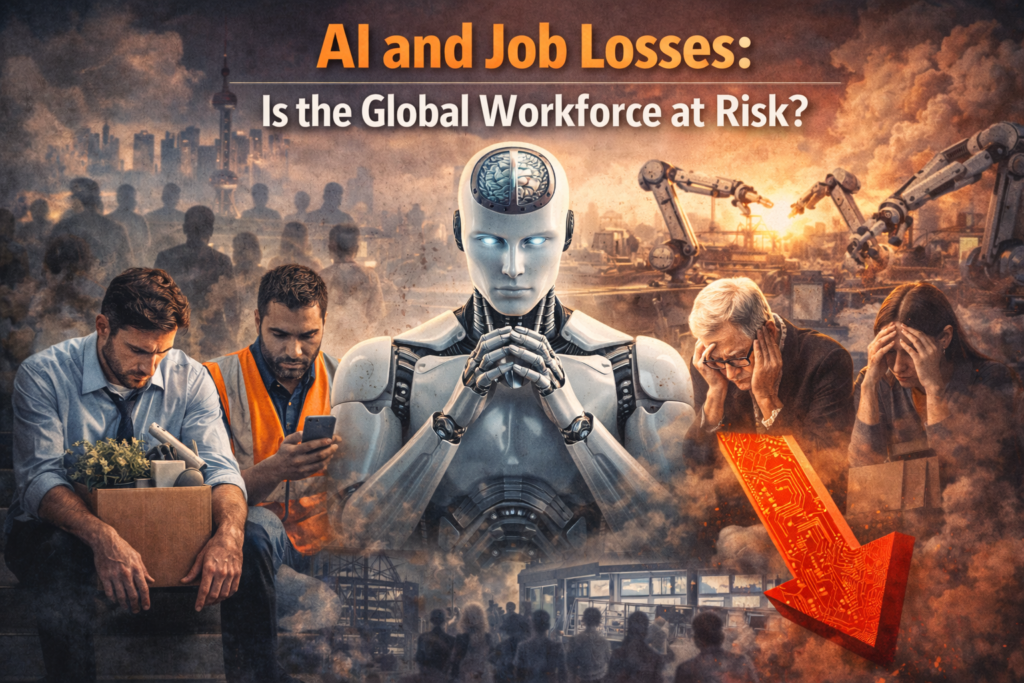
Real-Life Example: Changing Workplaces
Consider a customer service company that once relied entirely on human agents.
Today, AI chatbots handle most basic queries. This shift reflects how AI reflect towards Job Losses are already changing job structures.
However, the same company now hires AI specialists and system trainers, showing that AI and Job Losses do not always mean fewer opportunities.
The Other Side: Jobs Created by AI
While discussions focus on AI and Job Losses, new opportunities are emerging.
New Career Paths
- AI development
- Data science
- Automation management
- Digital strategy roles
These roles are growing because of the same forces driving AI and Job Losses.
Global View on AI and Job Losses
Countries across the world are responding differently to AI Job Losses.
- Developed nations focus on reskilling
- Developing economies face higher disruption risks
- Governments are introducing AI policies
According to the World Economic Forum, technological shifts may displace jobs but also create new ones.
You can explore global workforce insights here:
https://www.weforum.org
Is AI Replacing Humans or Supporting Them?
In reality, AI is often enhancing human work rather than eliminating it.
Example
A marketer now uses AI tools for analysis and content support.
The Skills Shift: The Real Impact
The biggest impact of AI on Job Losses is not unemployment, but changing skill requirements.
Skills That Matter Now
- Problem-solving
- Creativity
- Adaptability
- Emotional intelligence
People who develop these skills are less likely to be negatively affected by AI on Job Losses.
Risks That Need Attention
Despite opportunities, of AI on Job Losses come with serious concerns:
- Short-term job displacement
- Increased inequality
- Skill mismatch
- Economic uncertainty
These risks highlight why managing AI and Job Losses carefully is important.
For global workforce impact and AI disruption data:
👉 International Monetary Fund analysis on AI and jobs:
https://www.imf.org/en/blogs/articles/2024/01/14/ai-will-transform-the-global-economy-lets-make-sure-it-benefits-humanity
What Individuals Should Do
Instead of fearing AI and Job Losses, individuals can prepare for change.
Practical Steps
- Learn digital and AI-related skills
- Stay updated with industry trends
- Build multiple income streams
- Focus on human-centric abilities
Preparation reduces the negative impact of AI on Job Losses.
The Bigger Perspective
Every major technological shift has caused disruption.
From industrial machines to computers, jobs evolved rather than disappeared.
Similarly, AI and Job Losses represent a transition, not an end.
Conclusion: Risk or Opportunity?
So, are AI and Job Losses a global threat?
They can be—but only if we fail to adapt.
The future of work will not be defined by machines replacing humans, but by how humans choose to work alongside them in the era of AI and Job Losses.
FAQ Section
1. What are AI and Job Losses?
They refer to the impact of automation and artificial intelligence on employment across industries.
2. Will AI replace all jobs?
No. It will transform jobs and create new opportunities rather than eliminate all roles.
3. Which jobs are most at risk?
Repetitive and routine jobs are more likely to be affected.
4. How can people stay relevant?
By learning new skills, adapting to technology, and focusing on human strengths.
5. Is AI a threat or opportunity?
It depends on how individuals and organizations respond to the change.