

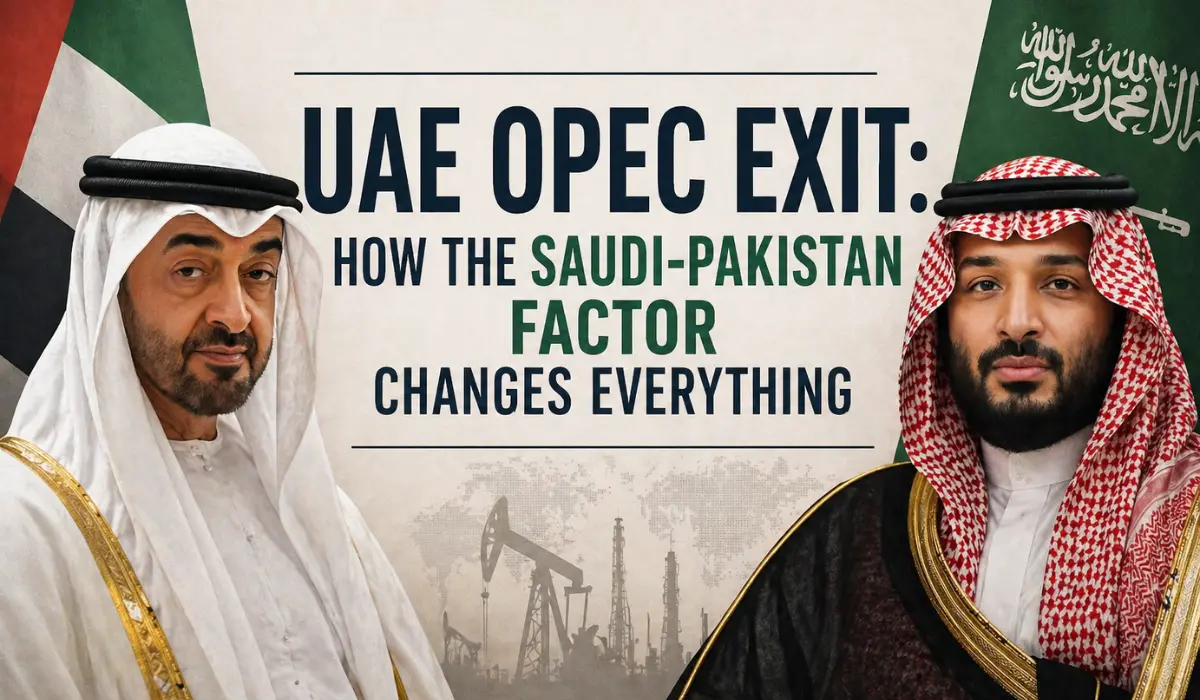
A New Era for Oil? Why the UAE’s Potential OPEC Exit Matters
The global energy market is on edge as rumors of a UAE OPEC exit continue to swirl. For decades, the United Arab Emirates has been a pillar of the Organization of the Petroleum Exporting Countries (OPEC). However, as the nation seeks to modernize its economy and maximize its massive investments in oil infrastructure, the constraints of the cartel are becoming harder to ignore.
While the primary friction is often cited as production quotas, a deeper geopolitical layer involving the Saudi-Pakistan factor is playing a significant role in reshaping these regional alliances.
Table of Contents
Understand the UAE OPEC Exit set for May 2026. Learn how the Saudi-Pakistan factor and regional tensions are reshaping the global oil market. Read the full analysis.
Why the UAE is Reconsidering Its Membership
The UAE has invested billions into increasing its crude oil production capacity, aiming for 5 million barrels per day by 2027. Under current OPEC+ agreements, led largely by Saudi Arabia, the UAE is frequently forced to keep its production capped to maintain global prices.
From the UAE’s perspective, these caps prevent them from monetizing their resources at a time when the world is transitioning toward green energy. This economic friction is the “engine” of the potential exit, but the “fuel” is a complex web of diplomatic shifts.
The Saudi-Pakistan Factor Explained
Geopolitics in the Middle East is never just about oil; it is about influence. As highlighted in recent analysis by NDTV, the relationship between Saudi Arabia and Pakistan has historically been a cornerstone of regional security.
However, as the UAE asserts itself as a more independent diplomatic power, its interests have begun to diverge from the traditional Saudi-led bloc. The “Saudi-Pakistan factor” refers to the long-standing strategic partnership where Saudi Arabia provides financial aid to Pakistan in exchange for military and security support.
Key points of the Saudi-Pakistan dynamic:
- Competing Influence: The UAE has recently sought to build its own unique relationship with Pakistan, often competing with Saudi Arabia for investment opportunities and strategic leverage.
- Security Shifts: The UAE’s normalization of ties with Israel (Abraham Accords) changed the regional math, making the traditional Saudi-Pakistan security nexus feel outdated to Emirati planners.
- Diplomatic Independence: By potentially leaving OPEC, the UAE signals that it is no longer willing to follow the Saudi roadmap for the region, which includes how the Gulf interacts with South Asian powers like Pakistan.
Global Impact: What Happens to Oil?
If a UAE OPEC exit becomes a reality, the global oil market would face immediate volatility.
- Price Wars: Without the UAE adhering to quotas, a surge in supply could lead to a significant drop in crude oil prices.
- The End of OPEC? The UAE is the third-largest producer in the cartel. Its departure could trigger other members to leave, effectively ending the cartel’s ability to control the market.
Impact on India
For India, the UAE’s shift is a double-edged sword.
- Energy Security: Increased production from the UAE could lead to lower oil import bills for India, a major relief for its economy.
- Strategic Balancing: India maintains deep ties with both the UAE and Saudi Arabia. Any friction between these two giants—especially regarding their influence over Pakistan—requires India to perform a delicate diplomatic balancing act to protect its own interests in the Middle East.
Quick Summary: The UAE-OPEC Tension
- Production Quotas: The UAE wants to pump more oil; OPEC (led by Saudi Arabia) wants to keep production low.
- Geopolitical Rivalry: The UAE is seeking a more independent foreign policy, separate from Saudi Arabia’s traditional alliances.
- The Pakistan Link: Competition for influence over Pakistan highlights the growing divide between Emirati and Saudi interests.
- Market Risk: A formal exit could destabilize global oil prices and weaken the OPEC+ alliance.
China’s Economic Slowdown is reshaping global markets. Can India turn this shift into an opportunity or will risks outweigh the benefits? to Know More Click Here.