 11
11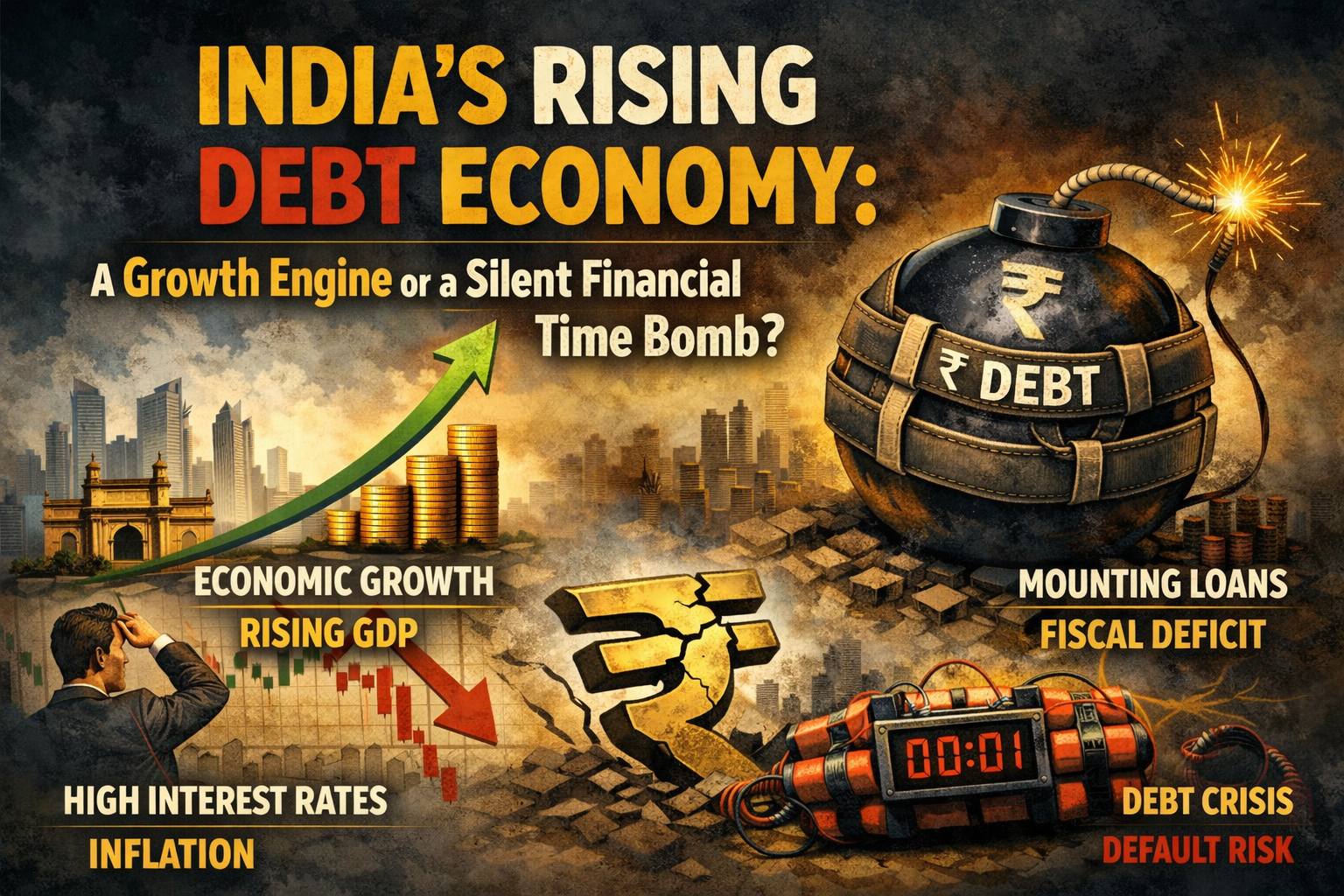
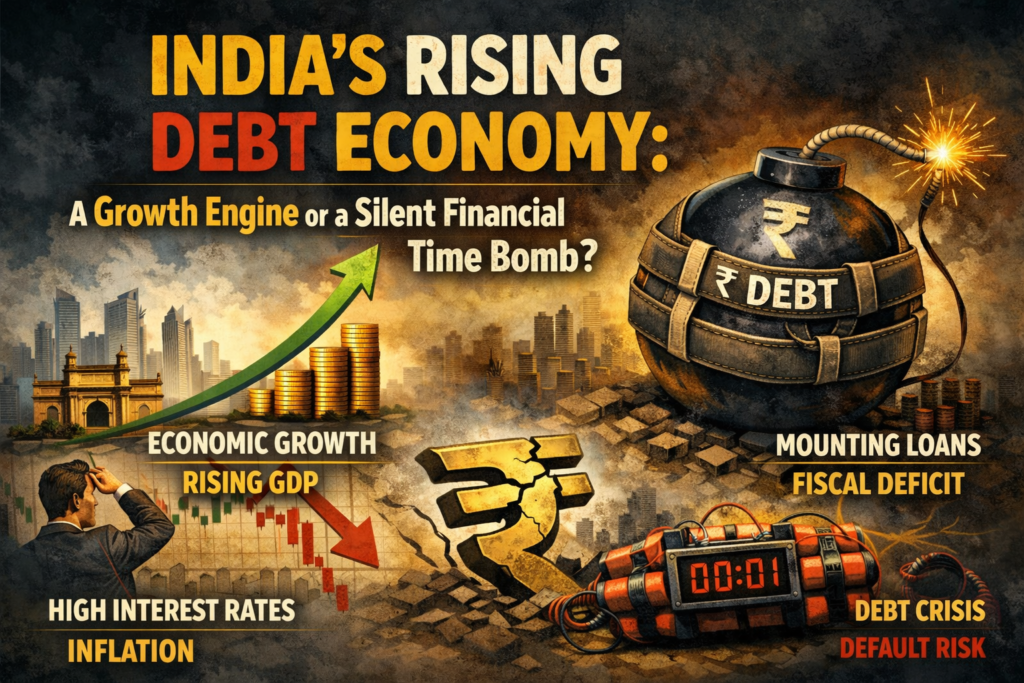
India’s Rising Debt Economy is reshaping growth and risk. Is rising borrowing fueling progress or creating a financial time bomb for the future?
Walk through any Indian city today and you’ll notice something interesting. New cars, new homes, packed malls, and a lifestyle that seems to be improving rapidly. On the surface, everything points to economic progress.
But beneath this visible prosperity lies a deeper trend — India’s Rising Debt Economy.
More individuals, companies, and even the government are relying on borrowed money to sustain growth. This raises an uncomfortable but necessary question:
Are we witnessing real wealth creation, or just a cycle of credit-driven expansion?
At its core, India’s Rising Debt Economy refers to an economic structure where growth is increasingly supported by borrowing rather than income or productivity alone.
This trend isn’t unique to India, but its pace here is worth paying attention to.
India’s government has significantly increased spending on infrastructure and welfare. While this fuels development, it also strengthens India’s Rising Debt Economy by increasing fiscal dependency on loans.
Businesses are expanding aggressively using credit. Sectors like real estate and telecom are deeply linked to India’s Rising Debt Economy, where growth often comes with high leverage.
This is where the shift becomes personal.
From home loans to credit cards, individuals are now central to India’s Rising Debt Economy, making consumption heavily credit-driven.
There isn’t a single reason. It’s a combination of structural and behavioral changes.
Banks and fintech platforms have made loans incredibly accessible. This has accelerated India’s Rising Debt Economy, especially among young earners.
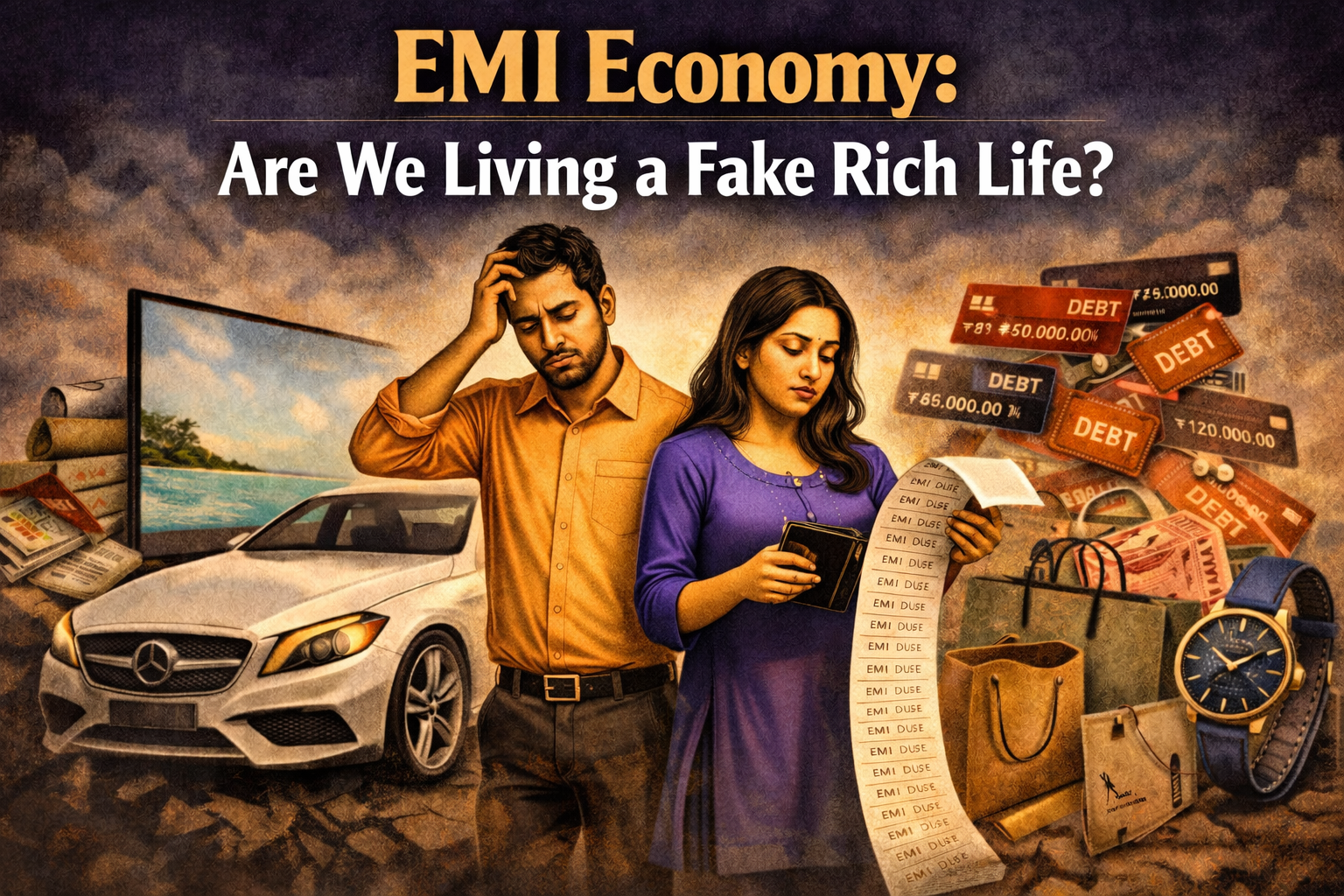
People want better lifestyles — and they want them now. This mindset fuels India’s Rising Debt Economy through EMI-based consumption.
Government policies encouraging spending and infrastructure development have also expanded India’s Rising Debt Economy.
Let’s be honest. EMIs feel convenient.
Instead of waiting years to afford something, you can get it today and pay later. That’s the psychological engine behind India’s Rising Debt Economy.
But here’s the catch:
Over time, this transforms India’s Rising Debt Economy into a system where people appear wealthy but are financially stretched.
The RBI constantly tries to maintain balance. By adjusting interest rates, it influences borrowing patterns within India’s Rising Debt Economy.
Lower rates encourage spending. Higher rates slow things down.
But managing India’s Rising Debt Economy isn’t simple. Too much control can slow growth, while too little can create instability.
For a deeper understanding of monetary policy, you can explore the Reserve Bank of India’s official framework:
https://www.rbi.org.in
This is where opinions start to differ.
Supporters argue that India’s Rising Debt Economy is necessary for a developing nation. Infrastructure, businesses, and consumption all need capital.
Critics, however, see warning signs.
Global institutions like the International Monetary Fund have repeatedly highlighted how unchecked borrowing can destabilize emerging economies.
You can read more about global debt trends on International Monetary Fund insights:
https://www.imf.org
Consider a typical urban professional:
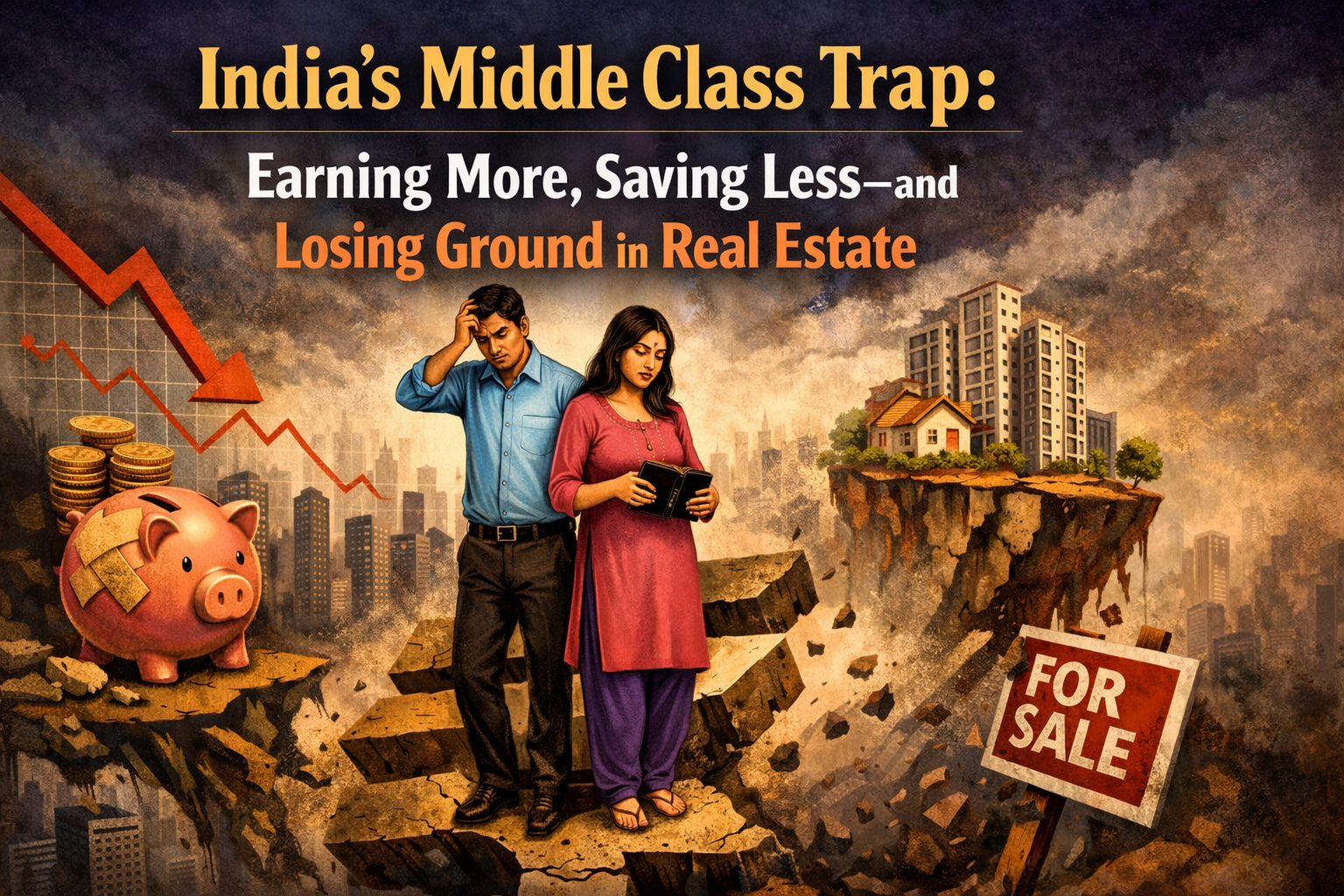
On paper, they are part of a growing economy. In reality, they are deeply embedded in India’s Rising Debt Economy.
There’s little room for savings, and any financial shock can disrupt stability.
It’s not all negative. In fact, India’s Rising Debt Economy has played a major role in:
Without borrowing, growth would likely be much slower.
The issue isn’t debt itself — it’s how responsibly it is used within India’s Rising Debt Economy.
India is not alone in this trend.
However, India’s Rising Debt Economy is still in a growth phase, which gives it a potential advantage — if managed wisely.
This is where things get personal.
Not all debt is bad. A home loan that builds an asset is different from a credit card bill funding lifestyle expenses.
The future of India’s Rising Debt Economy depends on this distinction.
If borrowing leads to asset creation, it strengthens the economy.
If it fuels consumption without returns, it creates long-term risk.
So where does that leave us?
India’s Rising Debt Economy sits at a crossroads. It has the potential to accelerate India’s journey toward becoming a global economic powerhouse.
At the same time, it carries risks that cannot be ignored.
The outcome will depend on one thing — discipline.
From policymakers to individuals, the way debt is managed today will shape the future.
If used wisely, India’s Rising Debt Economy can be a growth engine. If not, it could quietly turn into a financial time bomb.
The question is no longer whether debt will grow — but how we choose to handle it.
It refers to the increasing reliance on borrowing by the government, businesses, and households to drive economic growth in India.
No. Debt can support growth if used for productive purposes like infrastructure and business expansion. Problems arise when it fuels excessive consumption.
Easy access to credit and changing lifestyle aspirations have made EMIs a preferred way to afford expensive goods and services.
The Reserve Bank of India regulates monetary policy and influences borrowing through interest rates.
It is possible if borrowing grows unchecked. However, strong economic growth gives India an opportunity to manage its debt effectively.
Focus on limiting unnecessary loans, building savings, and ensuring that borrowing contributes to asset creation rather than just consumption.