 11
11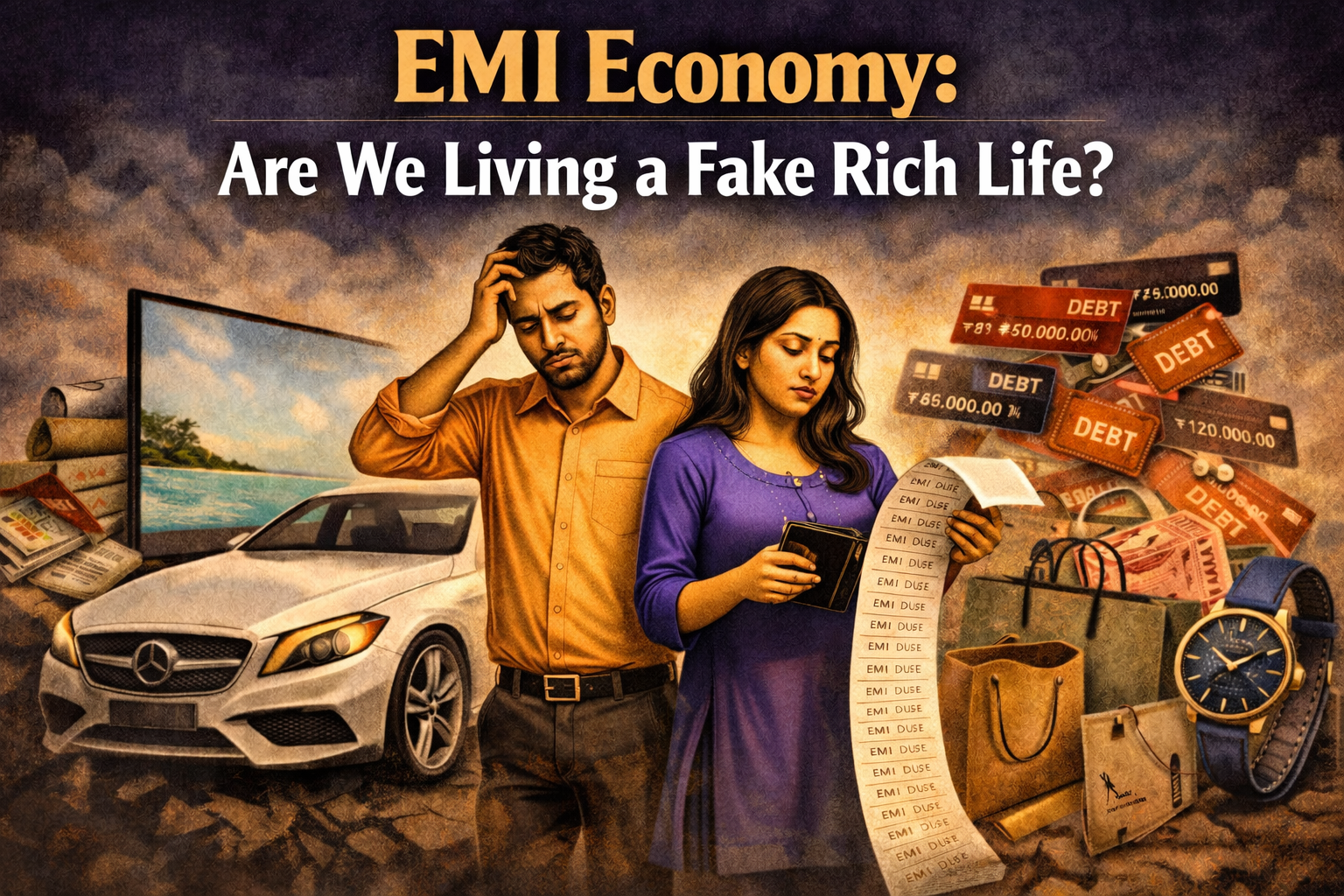
Discover how the EMI Economy is creating a fake rich lifestyle in India. Learn how debt, home loans, and spending habits impact real estate decisions.
Walk into any urban neighborhood today, and you’ll notice something interesting. New cars, premium apartments, the latest smartphones—everything signals prosperity. But if you scratch beneath the surface, a different story begins to emerge.
This is the reality of the EMI Economy.
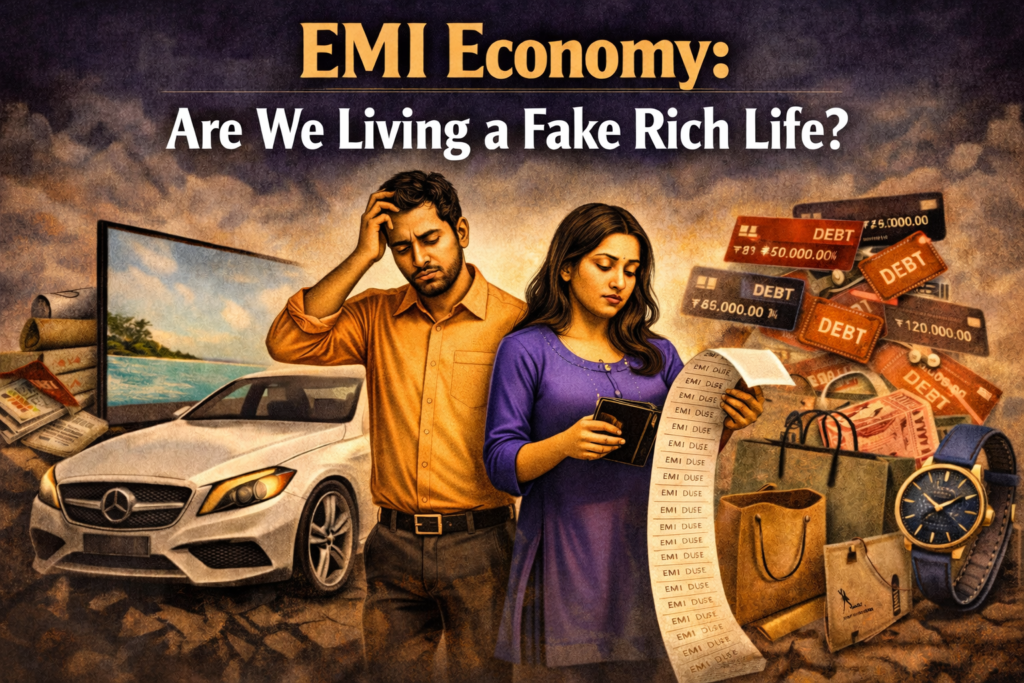
People appear wealthier than ever, yet financial stress is quietly rising. Many are not truly rich—they are simply committed to long-term payments. From home loans to lifestyle purchases, everything is financed.
And nowhere is this illusion stronger than in real estate.
The EMI Economy refers to a system where consumption is driven by easy credit rather than actual purchasing power.
Instead of asking:
“Can I afford this?”
People now ask:
“Can I afford the EMI?”
This shift has changed how Indians approach money, especially when it comes to big decisions like buying a house.
According to insights related to
https://en.wikipedia.org/wiki/Mortgage_loan, long-term borrowing has become a standard financial tool globally—and India is catching up fast.
Let’s be honest—most people don’t buy things just for utility anymore.
They buy for:
The EMI Economy makes it possible to access things that were once out of reach. A person earning ₹50,000 per month can live a lifestyle that previously required double that income.
But here’s the catch.
Ownership is replaced with obligation.
You don’t fully own your car, your phone, or even your house—you’re paying for them over time. This creates what many call a “fake rich life.”
Real estate is where the EMI Economy becomes most serious.
Buying a home is often the biggest financial decision in a person’s life. Yet today, many buyers focus only on whether the EMI fits their monthly budget.
According to
https://en.wikipedia.org/wiki/Real_estate_in_India, urban housing demand continues to rise, pushing more people toward financed purchases.
The result?
A generation that owns homes—but at the cost of financial freedom.
There’s a psychological reason behind the popularity of EMIs.
Breaking a large payment into smaller monthly chunks makes it feel manageable. But this “manageable” feeling often hides the true cost.
Under the EMI Economy, comfort today often leads to constraints tomorrow.
The EMI Economy doesn’t exist alone. It works hand-in-hand with lifestyle inflation.
As income increases, spending increases even faster.
Instead of upgrading gradually, people make sudden jumps—because EMIs make it seem possible.
I’ve seen buyers in cities like Surat and Ahmedabad skip affordable options and directly jump into high-end apartments. Not because they could afford them outright—but because the EMI looked “manageable.”
That’s how the EMI Economy fuels financial overreach.
Traditionally, buying a house was considered a milestone.
But under the EMI Economy, this decision is often rushed.
Buying makes sense when:
Renting makes sense when:
Yet, many choose buying simply because EMI options are available.
That’s not financial planning—it’s emotional decision-making.
One EMI is manageable. Multiple EMIs create a cycle.
Today’s middle-class household often has:
This creates a chain reaction.
Income comes in—and immediately flows out.
The EMI Economy turns earning into servicing debt rather than building wealth.
Here’s where the real problem lies.
Wealth is built through:
But under the EMI Economy, most income is locked into liabilities.
A single disruption—job loss, health issue, or economic slowdown—can create serious financial stress.
The good news? This cycle is not permanent.
You can live comfortably without falling into the trap.
Just because it’s available doesn’t mean it’s necessary.
Keep total EMI under 30–40% of income.
Buy fewer things—but own them fully.
At least 6 months of expenses should be liquid.
Don’t let EMIs replace your investment discipline.
Breaking the EMI Economy mindset is less about income—and more about control.
Consider this:
A young professional earns ₹15 lakh annually and buys a ₹90 lakh apartment.
Initially, everything feels manageable.
But over time:
Suddenly, the “dream home” starts feeling like a burden.
This is how the EMI Economy creates the illusion of success while quietly building pressure.